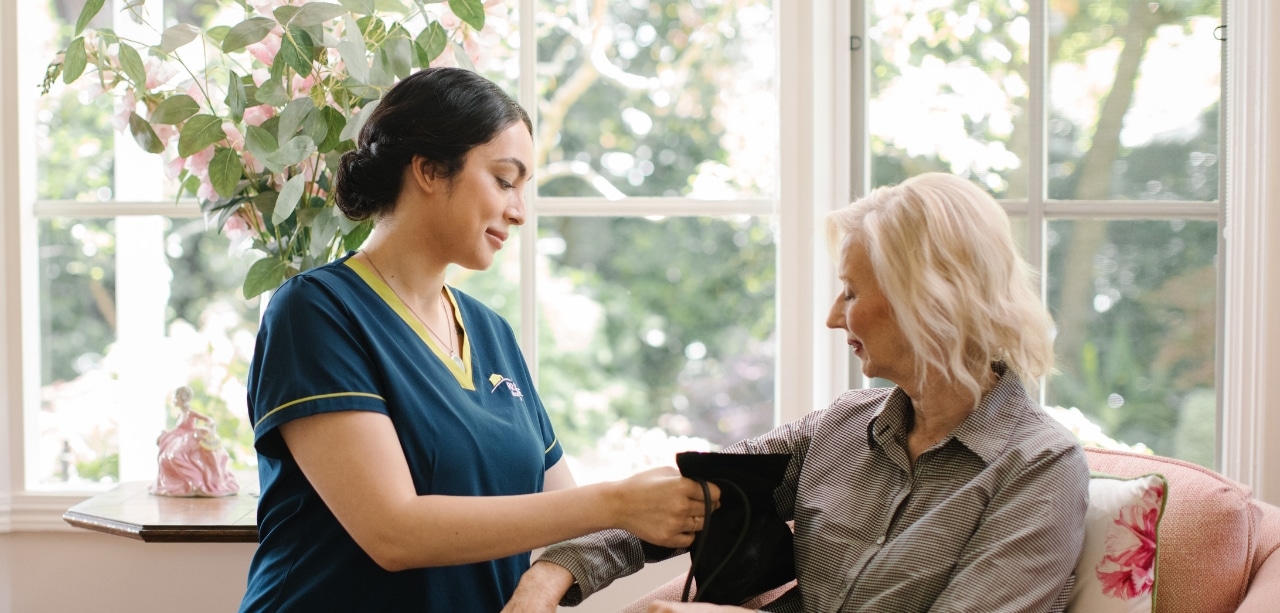
The majority of people diagnosed with a life-limiting or terminal illness wish to spend the final stages of their life at home. 70% of Australians want to die at home, but if you are faced with the challenge of assisting your loved one to transition home for palliative care you may not know where to start. Here’s a step-by-step guide to arranging palliative care at home.
When should you consider palliative care at home?
Arranging care earlier rather than later will reduce the stress on you and your loved ones. It will give you and your family more time to learn about and manage any symptoms and take into consideration your physical, emotional and spiritual needs. A common misconception is that palliative care is only for people who are dying. But palliative care at home can be beneficial to anyone who has been diagnosed with a life-limiting illness. Palliative care can be provided at the same time as treatment to slow down or resolve life-threatening conditions. Early palliative care focuses on helping your loved one to continue living as independently as possible and can improve quality of life.
What does palliative care at home look like?
Palliative care at home is delivered through a multidisciplinary team approach, which may include specialist palliative care clinicians, General Practitioners, nurses, allied health professionals, pharmacists, support workers and care management teams working together to support the client and their family.
Your GP, treating specialist or hospital team may refer you to a specialist palliative care service or community-based palliative care provider appropriate for your needs and location. Information about local specialist palliative care services can also be accessed through state-based health services and the National Palliative Care Service Directory.
Prestige Inhome Care works alongside your GP, your hospital team and specialist palliative care providers to help ensure care is coordinated, safe and seamlessly delivered at home.
Palliative care at home may include allied health care such as physiotherapy and occupational therapy, palliative care nursing, support for family or those caring for you, symptom & pain management, personal care, assistance with equipment and home modifications, respite care, bereavement support and more.
Arranging Palliative Care at Home
Given the wide range of professionals and services available to support you and your family with palliative care you may be wondering how to navigate the process of helping your loved one set up care at home. Here is a list of easy-to-follow steps to arranging palliative care in the home.

Step 1: Speak with your GP or hospital team
If you or your loved one wishes to receive palliative care at home, it is important to discuss your wishes with your doctor and hospital team. They will likely ask you about you or your loved one’s wishes about comfort, pain relief and treatment, cultural and spiritual preferences, the nature and types of support needed, and wishes for end-of-life care.
You can ask your GP or hospital team what modifications you may need at home to create a safe and workable space for palliative care. Your GP can discuss what medications may be required, access to allied health where needed and provide you with any referrals required to set up palliative care at home.
Step 2: Understand what support is needed at home
Many people with a life-limiting illness choose to remain at home because it’s a familiar environment and they are close to family and friends. In-home palliative care also makes it easier to maintain your daily routine and keep your independence. Your needs will determine what services you may require. There are a wide range of services to support you at home which may be delivered by different health care professionals, working together as a team. Prestige Inhome Care works alongside your GP, your hospital professionals and specialist palliative care providers, forming a multidisciplinary team who support you and your family through every stage of the palliative journey.
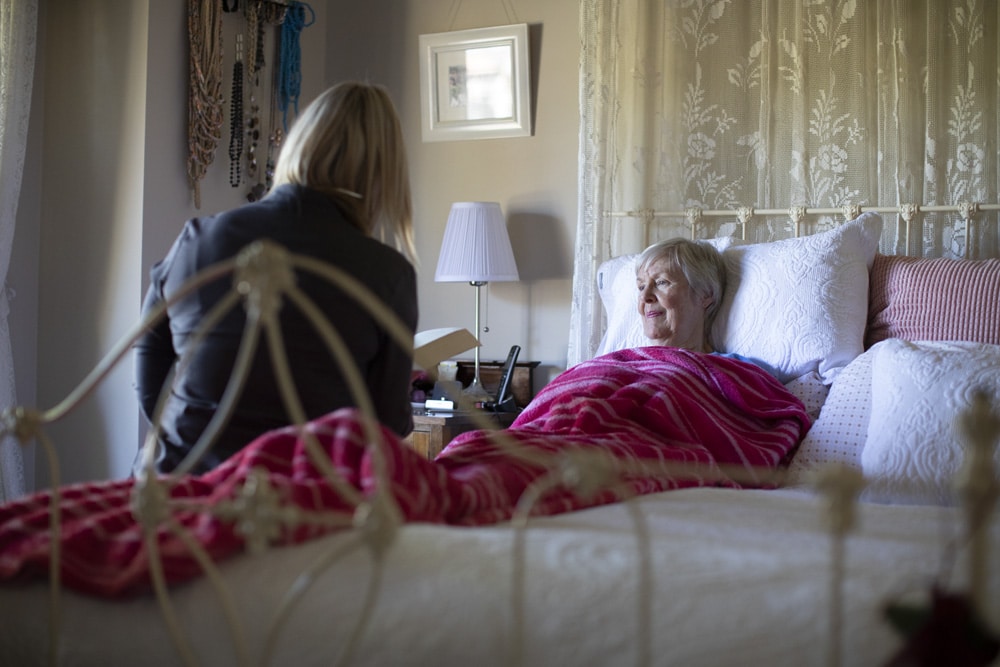
At Prestige we provide a range of in-home care services including:
- Personal Care: Showering, dressing, continence care, grooming, pressure area and mouth care, and skin integrity support
- Domestic Support: light housekeeping and household chores, meal preparation, grocery shopping, paying bills etc.
- Respite Care: in-home care providing temporary relief for primary caregivers by arranging for a carer to provide support
- Transport: Transportation to and from appointments, social outings, errands and activities
- In-home Nursing: Wound and injury care, end-of-life comfort medication management, complex care, stoma care, catheter management, diabetes management, health and wellbeing checks
- 24 Hour Care: Round the clock care which can include any of the services listed here, delivered by a team of carers and nurses
- Home comforts and Facilitating Final Wishes: E.g. Massage, baths, creating a personalised environment, fulfilling cultural traditions, visits to special places, companionship
- Home and Garden Maintenance: lawn mowing and garden care, handyman services, minor repairs, clearing gutters, etc.
- Home Equipment Support and Bereavement Support: Organising hospital beds, pressure mattresses etc, and supporting you with after-death care
We can help you and your family understand the end-of-life process and support you during critical moments when extra care is needed or when specialist providers are limited. We have the clinical knowledge required to coordinate care with GPs, community and hospital teams, as well as pharmacies.
Step 3: Understanding funding options
Government-subsidised care
If the person is aged 65 years old or older:
You can apply via My Aged Care to be assessed for government-subsidised home care services. What you need to contribute (co-contributions) to your home care will depend on your services and financial situation.
End-of-Life Pathway
If a person over the age of 65 has been diagnosed with 3 months or less to live and wishes to remain at home, they may be eligible for the End-of-Life Pathway under the Support at Home program.
Under the End-Of-Life Pathway funding of up to $25,000 is available over 12 weeks. If an older person has funding remaining, they can continue using it for an additional 4 weeks, providing up to 16 weeks of services in total.
Assistive Technology and Home Modifications
Depending on your needs and situation, you may also be able to access equipment to help with mobility and equipment to enable you receive nursing care at home. This type of support is available through the Assistive Technology and Home Modifications (AT-HM) scheme, under the Support at Home program.
If the person is under the age of 65:
People under the age of 65 may be able to access funding for some in-home palliative care services via Medicare, state/territory health services, public hospitals and community palliative care teams. This includes specialist palliative care nurses visiting your home, equipment arranged through health services, pain and symptom management.
People living with a disability under the age of 65 can apply for funding via the NDIS but generally this does not cover palliative care related supports. The NDIS may continue to fund disability-related supports that are unrelated to the palliative diagnosis or that complement end-of-life care.
For more information about what palliative care funding and support is available for people under the age of 65 visit: Palliative Care and other options .
Private health insurance may also cover some costs if you use private health services.
Private palliative care at home
If you require care more urgently, or need additional hours or services you may opt to fund your loved one’s palliative care privately. Prestige Inhome Care can help you bring your loved one home from a facility or hospital. Alternatively, we can set up palliative care for a loved one already living in their own home, quickly and seamlessly. We can facilitate shared care with your GP, hospital team and any specialist palliative care providers. We provide support during those critical moments and any kind of extra care including nursing visits and even overnight care as needed. From a few hours a week right through to 24 hour care, private in-home care can be tailored to your specific needs at every stage of the palliative journey.
Step 4. Arrange a home assessment
To support care at home, an assessment can be completed to understand your care needs, home environment, safety considerations and support requirements.
Prestige Inhome Care works closely with clients, families and treating healthcare professionals to help coordinate safe and responsive in-home support services.
Care and support arrangements are tailored to the person’s changing needs and delivered in coordination with the treating healthcare team.
Step 5: Prepare your home
Your treating team and care providers can help coordinate the services, equipment and supports required for care at home.
Depending on your needs, this may include:
- Equipment such as hospital beds, pressure-relieving mattresses, mobility aids, bathroom equipment and oxygen therapy equipment
- Medication administration and guidance to support pain and symptom management at home
- Nursing and personal care support services
- Planning for changes in care needs and escalation pathways if symptoms worsen
- Creating a personalised environment based on current needs
Prestige Inhome Care works collaboratively with clients, families and treating healthcare professionals to help coordinate safe, flexible and responsive in-home support services.
Step 6: Begin care & adjust as needed
During palliative care at home, your needs can change rapidly. In-home care services are flexible and can be adapted to meet any evolving needs. If your loved one’s condition changes and they are diagnosed with 3 months or less to live our team can support you in requesting a high priority aged care assessment from My Aged Care. Prestige Inhome Care services can range from a few hours up to 24/7 care.
Step 7: Advance Care Planning
Advance care planning is a process to help you plan your medical care in advance. It is important because there may come a time in the future when you or your loved one may become too unwell to make decisions for yourself.
Doctors, carers and other medical professionals will refer to your advance care plan if the person receiving palliative care can no longer communicate or make decisions.
Advance care planning involves talking to your family, friends and carers about what you or loved one wants when it comes to future medical treatment and care. It can be an informal process or it can be more formal whereby you have documents that are legally recognised.
Often, people have not previously considered whether their loved one would feel comfortable with them assisting with intimate tasks such as bathing. While these are sensitive discussions, they are essential in helping families understand what care at home may involve, what support may be required, and how funding may need to respond as needs change over time.
While these conversations can feel confronting at first, this practical forward planning is one of the most helpful parts of our support. It reduces stress, improves preparedness, and makes it easier to respond as care needs increase.

Speak to our Care Specialists
If you or your loved one is in need of palliative care at home, Prestige Inhome Care is always available to answer your questions, provide information, and support you in making the best decision for your care needs.
Feel free to reach out for a no-obligation consultation. Together, we can find the best solution for you. Contact our friendly team on 1300 10 30 10 or via our online form: Contact Us – Prestige Inhome Care .